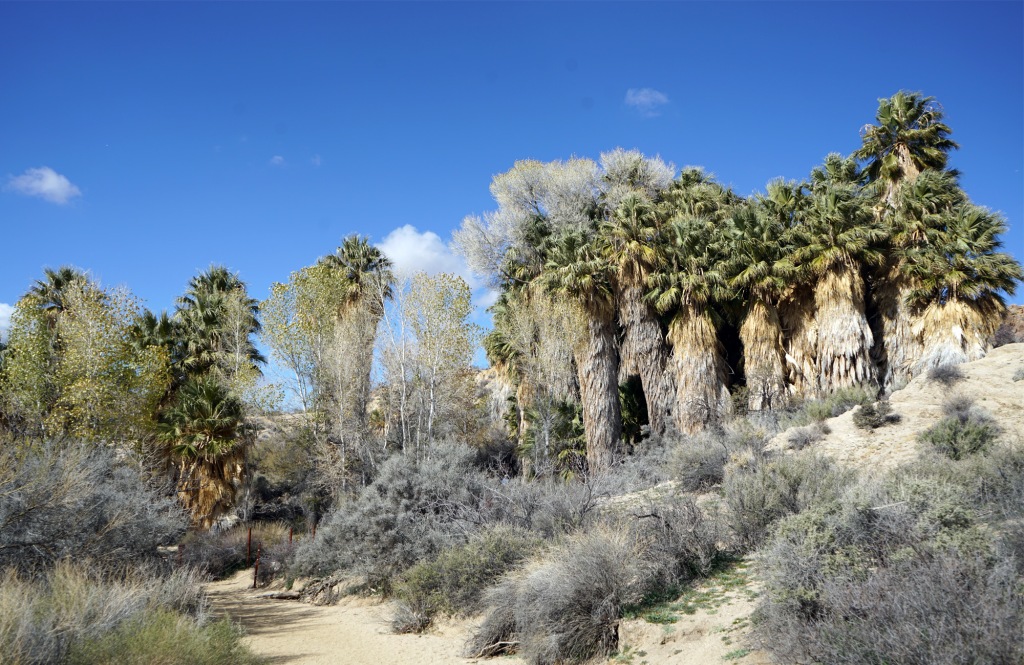
Nestled within the rugged beauty of Joshua Tree National Park, palm oases stand as lush, verdant secrets amidst the arid desert landscape. These natural havens are not only a stark contrast to their surroundings but also a testament to the resilience of nature and the hidden wonders waiting to be discovered. They are also sacred sites of immense cultural significance. Learn about the enchanting world of Joshua Tree’s palm oases, get a glimpse into their ecological importance, discover how to visit them, and understand why they remain one of the park’s most captivating attractions.
The Ecology of the Oases
The palm oases in Joshua Tree are primarily made up of the California fan palm (Washingtonia filifera), which is the only palm native to the western United States. These fan palms provide a critical habitat for a variety of wildlife, including many bird species as well as larger mammals like coyotes and bighorn sheep. The oases are fed by natural springs and support ecosystems that are radically different from their dry surroundings. The shade and water found at these oases create micro-habitats that allow for lush undergrowth, providing food, shelter, and breeding grounds for all types of animals.
Exploring the Oases
Joshua Tree National Park boasts several notable palm oases, each with its unique charm. Here are a few you should consider visiting:
Oasis of Mara: Located near the town of Twentynine Palms, the Oasis of Mara is a historically rich and ecologically significant site. Legend has it that the oasis was named by Indigenous people who called it Mara, meaning “the place of little springs and much grass.” With its origins steeped in Indigenous history, the oasis was believed to be blessed with a unique abundance of water. The oasis served as a vital resource for both the tribes and early explorers, and at a sad cost with the forced removal of Indigenous people. Today, the Oasis of Mara continues to be a point of interest for visitors to Joshua Tree National Park, offering a glimpse into the area’s past and an example of the desert’s natural beauty and contentious history. The oasis is easily accessible via a paved .5-mile interpretive loop.
Fortynine Palms Oasis: Accessed via a challenging and often dangerously hot hike, Fortynine Palms Oasis offers a rewarding view of a vibrant palm grove set against the backdrop of rocky outcrops. The 3-mile out-and-back trail takes you through a variety of desert landscapes before descending into the oasis.
Lost Palms Oasis: As one of the largest palm oases in the park, Lost Palms Oasis is a haven of over 100 palm trees. The difficult 7.5-mile round-trip hike passes by Mastodon Peak and provides stunning views of the Joshua Tree outback. The oasis offers spots of respite under the palm shade and among rock boulders.
Cottonwood Spring Oasis: Easily accessible and rich in history, Cottonwood Spring Oasis is a testament to the area’s geological and cultural past. A short walk from the parking area leads to the oasis, where you can also find remnants of gold mining operations and historical settler life. Cottonwood Spring Oasis is a significant cultural site for the area’s Indigenous people, and is a prime bighorn sheep and birding habitat.
Visiting the palm oases of Joshua Tree offers a rare opportunity to witness the resilience of life in the desert. These spots serve as beautiful reminders of nature’s ability to create pockets of life in the most unexpected places, and contending forces vying for resources. Whether you’re a hiker, nature lover, or simply seeking solitude, the oases provide a unique desert experience that contrasts sharply with the rugged landscapes of Joshua Tree.




 Pudgy Buffalo
You must be logged in to post a comment.