From Lazy Hiking: Joshua Tree National Park
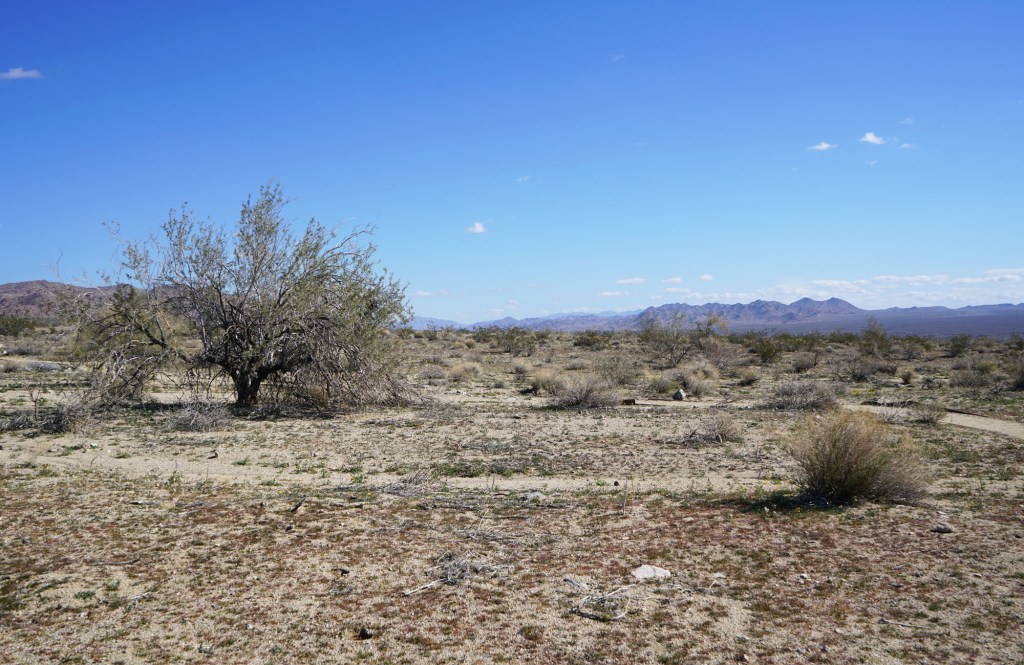
- .3 miles (.5 km) / very easy
- Nature trail with interpretive signs
- Colorado Desert plants
- Wide, sandy path not suitable for some wheelchairs
- No food or drinking water available
Quick Look: Bajada Nature Trail is a short-and-sweet .3-mile (.5 km) loop through a magical low-desert garden. Interpretive plaques along the way highlight the extraordinary plants sprouting from this unusual swath of desert. This nature trail is particularly special in the springtime when much of the flora is in bloom, though dormant seasonal plants also hold many secrets for budding botanists. The dirt path is flat and easy, and the trail includes benches for relaxing. The path, however, is not shaded, and sits fully exposed to the powerful desert sun. The trail’s location near the park’s southern border makes it a great place for a quick leg-stretch while traveling in or out of the park, and an excellent sunset walk.
Directions: Bajada Nature Trail is located near the park’s southern border, between Interstate 10 and the Cottonwood Visitor Center. From I-10, take Pinto Basin Road north into Joshua Tree National Park, passing by the park’s south entrance sign. 1.3 miles from Interstate 10, find the parking area for Bajada Nature Trail on the right (east) side of the road.
Explore It: From the parking area, the Bajada (pronounced buh-haa-duh) Nature Trail ambles east over a small footbridge spanning a dry creek bed. Take a moment to check out the mountainous backdrop. Rotate 360 degrees and see rugged peaks in all directions—the Cottonwood Mountains to the northwest, the Eagle Mountains to the northeast, the Orocopia Mountains to the south, and the Santa Rosa Mountains to the west. A mountain is vital in the formation of a bajada. Find a bajada, find a mountain.
From the footbridge, begin the nature loop from either the right or the left side; either way works for an up-close view of this fascinating low-desert vegetation. The low-elevation Colorado Desert (a subsection of the Sonoran Desert, east of the Colorado River) here is king. Instead of Joshua trees, a different variety of plant life springs forth from the subtropical desert crust. The ironwood tree, a warm-loving hardwood, prefers this milder Colorado Desert ecosystem to the occasionally cold and frosty Mojave Desert lands to the north. Green-barked palo verde trees also take root here. Bajada cacti include the yellow-spined golden cholla; the spindly, tubular pencil cholla; and the broad, flat beavertail cactus. In the spring, see red-tipped ocotillos arching over the desert boundary, as well as blue-flowering indigo bush. In early summer, catch smoke trees flashing brilliant purple flowers.
Lucky spotters may see of some of the bajada’s hardy fauna like lizards, jackrabbits, ground squirrels, hummingbirds, migrating butterflies, and desert tortoises. Although the bajada may seem like a parched, barren tract of nothing in particular during the long dry season, with its sienna-tinged shrubs and a twisting geometry of deadwood baked and preserved in the desert sun, pause and take a closer look. Life is here, waiting to reveal its secrets.




 Pudgy Buffalo
Leave a comment