No visit to Joshua Tree National Park is complete without a visit to the unforgettable rock formations that make the park unique. Take a look at these eight famous rocks that keep visitors rolling on through:
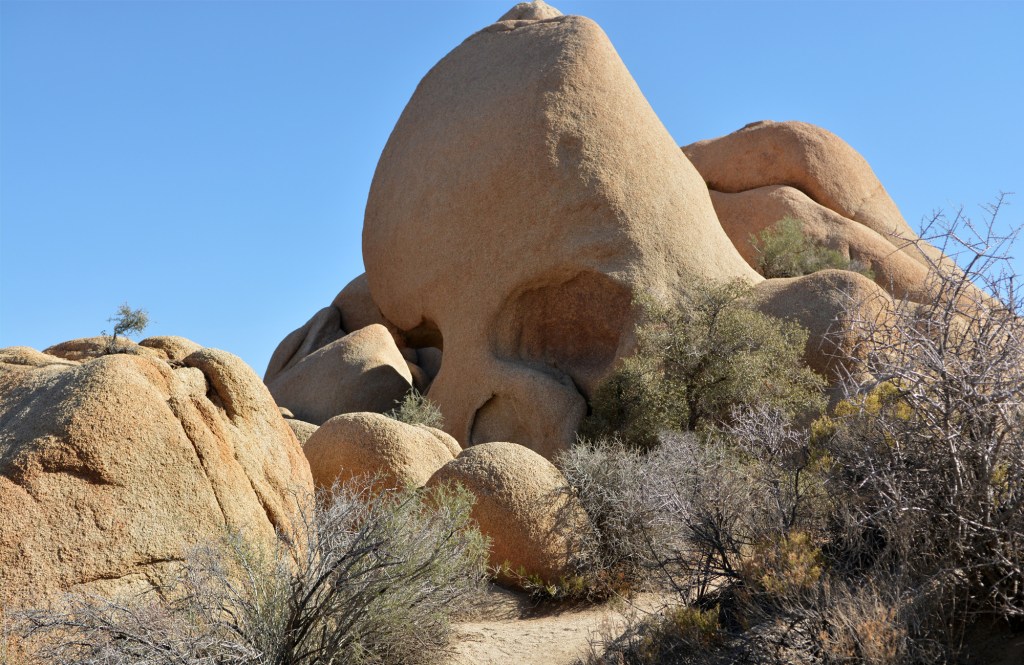
1. Skull Rock
Where: Off of Park Boulevard, Joshua Tree National Park.
What: The biggest “rock” icon in the park, this giant chunk of hollowed-out granite appears to have sunken eye sockets and nostrils. Its unique look has been crafted over many eons, as water collected in small depressions in the rock, slowly eroding it away and forming deep cavities to create this formidable skull.
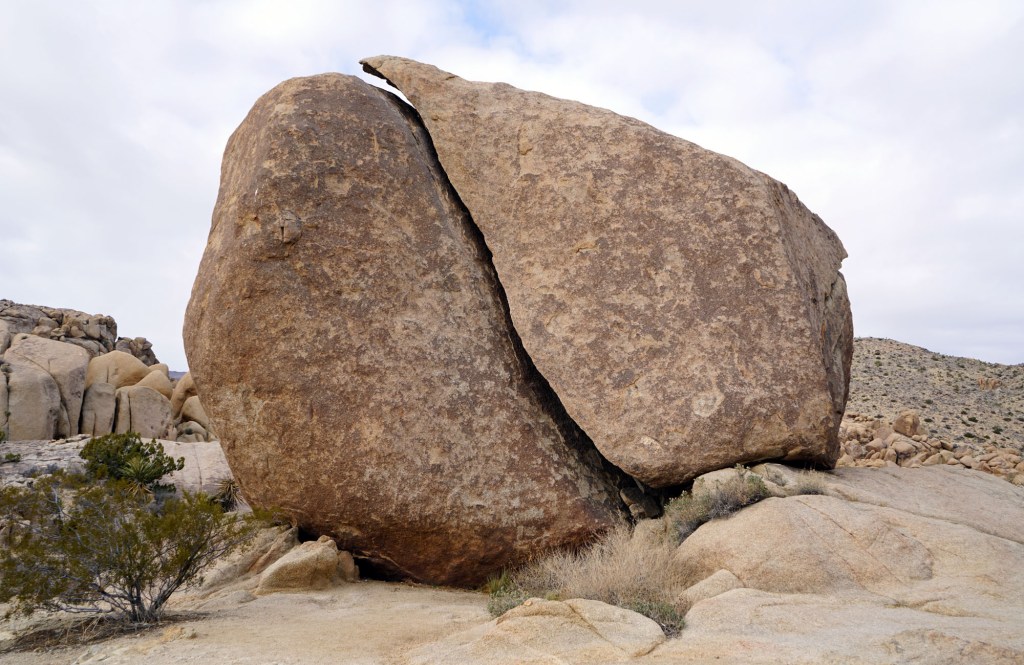
2. Split Rock
Where: Split Rock parking area, Joshua Tree National Park.
What: Split Rock is a giant round boulder that looks like it’s been split in half. This natural wonder is about 30 feet tall and has a narrow gap sliding diagonally through the rock. While the exact cause of the split is not known for sure, it is thought to be the result of millions of years of erosion and weathering. Rainwater may have slowly trickled into cracks in the rock, eroding away the granite and widening the gap. This eventually may have caused the rock to split into two pieces.

3. Arch Rock
Where: Arch Rock Trail, near White Tank Campground. Use the Twin Tanks parking area, Joshua Tree National Park.
What: Arch Rock is a 30-foot White Tank granite arch in Central Joshua Tree National Park, created by erosion, and is a popular spot for night-time photography shoots.
4. Heart Rock
Where: Near Arch Rock. Access via Arch Rock Trail. Use the Twin Tanks parking area, Joshua Tree National Park.
What: Heart Rock is a cute heart-shaped boulder near Arch Rock in Central Joshua Tree. Over time, weathering and erosion have rounded out the edges of the rock and worn a dip in the top center of the boulder to create the shape of a free-standing heart. Heart Rock, embodying boho desert chic, is about 10 feet tall, making it a perfect backdrop for whimsical desert photos.

5. Face Rock
Where: Face Rock Trail. Connect via Split Rock Loop Trail or Discovery Trail, Joshua Tree National Park.
What: Face Rock is a rock formation that looks like a human face. Face Rock protrudes out from a wall of rocks in Central Joshua Tree between Discovery Loop and Split Rock Loop; both trails have spurs to bring you to the famous profile. The familiar rock protrudes from a boulder wall to show its somber side if approached from Split Rock Loop, and startle with its laughably confounded expression when approached from Discovery Loop. The best profile view of Face Rock can be seen from the informative plaque from the Split Rock side.
6. Penguin Rock
Where: Jumbo Rocks Campground, near campsite #18, Joshua Tree National Park.
What: Penguin Rock is a rock formation that resembles an Emperor Penguin. In the desert above campsite #18 in Jumbo Rocks Campground, look for a juniper tree lithely bending towards a very distinct looking rock. This rock, with its tapered, oblong shape resembling an upright Emperor Penguin is famous Penguin Rock. This unlikely desert duo has charmed campground visitors throughout the years and is a favorite entry in vacation journals. For the best access to this friendly formation, reserve Jumbo Rocks campsite #18 online, or tread very carefully through the campground to reach its desert perch.
7. Saddle Rocks
Where: Saddle Rocks, near Ryan Ranch and Ryan Mountain, Joshua Tree National Park.
What: Saddle Rocks is a large rock formation resembling a livestock saddle. Saddle Rocks is a giant rock formation with three distinct pitches at the western base of Ryan Mountain in Central Joshua Tree. It’s one of the largest single rock formations in the park. If being a looky-loo is more your speed, Saddle Rocks is easily seen from Park Boulevard, between the Ryan Ranch parking area and the Hall of Horrors parking area, on the east side of the road.
8. Cow Rock
Where: Hidden Valley Nature Trail, north-northwest of the trail, Joshua Tree National Park.
What: Cow Rock is just as it sounds, a hilarious cow-shaped rock. This extra-fun boulder is located in Hidden Valley—which is very apropos considering Hidden Valley was once a prime longhorn hideout for cattle rustlers. The funny formation can be found atop the rock stacks bordering Hidden Valley Nature Trail. Look for Cow Rock on the western side of the trail, west of the loop’s western loop arm. The rock is about .4 miles from the trailhead. Freestyle scramble up the boulders to climb onto the cow’s haunches for an entertaining pic.
Explore these unforgettable rock formations and more in 150 Things to See, Do & Love: Joshua Tree National Park available on Amazon.




 Pudgy Buffalo
You must be logged in to post a comment.